ΑΡΧΑΙΟ ΘΕΑΤΡΟ ΚΕΦΑΛΟΥ ΣΤΗ ΘΕΣΗ ΠΑΛΑΤΙΑ




 Πηγή: Αρχαία Ιστορία της Κω (Από τα προϊστορικά μέχρι τα ρωμαϊκά χρόνια)
Έκδοση Νομαρχιακής Αυτοδιοίκησης Δωδ/σου Επαρχείο Κω 1998
φωτογραφίες: Sophia Karagianni

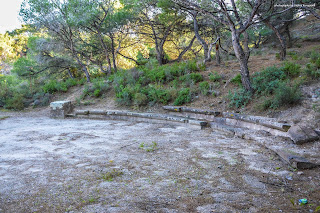
Γνωστό και ως Θέατρο Δήμου Ισθμιωτών, το ελληνιστικό θέατρο της Κεφάλου με θέα το Καμάρι, βρίσκεται σε περίοπτη θέση στην παλιά ακρόπολη της αρχαίας πρωτεύουσας του νησιού στη θέση Παλάτια (Η Κέφαλος, στην αρχαιότητα, ονομαζόταν Αστυπάλαια και μέχρι το 366 π.Χ. ήταν η πρωτεύουσα του νησιού).

Το αρχαίο θέατρο της Κεφάλου, περιτριγυρισμένο από χαμηλούς λόφους, είναι ένα από τα τρία σημεία στη θέση Παλάτια που πρέπει να επισκεφτεί κάποιος, Τα άλλα δύο είναι τα ερείπια της αρχαίας Ακρόπολης και τα ερείπια ναού δωρικού ρυθμού αφιερωμένου στον Ασκληπιό και την Υγεία.


Ανακαλύφθηκε το 1928 από τον Ιταλό Αρχαιολόγο Laurenzi. Η σκηνική του κατασκευή ήταν αναγνωρίσιμη σε επίπεδο θεμελίωσης. Διατηρούσε λίγες σειρές καθισμάτων, παλιότερα φαίνονταν τρεις ολόκληρες σειρές (σε φωτογραφία του Aldo Neppi Modona λίγο αφού ανακαλύφθηκε), ενώ τώρα μόλις οι δύο. Ίσως γιατί το δάσος που βρίσκεται ακριβώς από πάνω, "κατεβαίνει" σιγά σιγά.

Στο κέντρο βρισκόταν η Διονυσιακή κυκλική "θυμέλη" (το κεντρικό μέρος της ορχήστρας που απήγγειλαν οι ηθοποιοί και συνήθως ο κορυφαίος του χορού. Ήταν διαμορφωμένο βήμα σε σχήμα βωμού).


Η σκηνή είχε μήκος 13,25 μ. και διατηρούνταν τα θεμέλια από 4 κολόνες δωρικού ρυθμού, καθώς και αρχιτεκτονικά μέλη δωρικού, επίσης, "θριγκού". Χαρακτηριστική είναι η τοποθέτηση του θεάτρου στη φυσική κλίση του λόφου καθώς και η απουσία "λογείου" (μέρος της σκηνής του θεάτρου όπου έπαιζαν οι ηθοποιοί (τραγωδοί, κωμωδοί κλπ)


Στις πεζοπορίες μας προς περιοχές μετά το χωριό της Κεφάλου, συνηθίζουμε να σταματάμε για μια περιήγηση στον αρχαιολογικό χώρο της θέσης Παλάτια και βγάζουμε μια αναμνηστική φωτογραφία στις θέσεις του θεάτρου.


Έκδοση Νομαρχιακής Αυτοδιοίκησης Δωδ/σου Επαρχείο Κω 1998
φωτογραφίες: Sophia Karagianni
Ακολουθεί η μετάφραση του κειμένου στα αγγλικά:
ANCIENT THEATRE OF KEFALOS AT THE SITE OF PALATIA
Also known as the Theatre of the Demos of the Isthmians, the Hellenistic theatre of Kefalos, overlooking Kamari, is located in a prominent position on the old acropolis of the island’s ancient capital, at the site of Palatia. (In antiquity, Kefalos was called Astypalaia and remained the capital of the island until 366 BC.)
The ancient theatre of Kefalos, surrounded by low hills, is one of the three sites at Palatia that visitors should explore. The other two are the ruins of the ancient Acropolis and the remains of a Doric-style temple dedicated to Asclepius and Hygieia.
It was discovered in 1928 by the Italian archaeologist Laurenzi. Its stage structure was identifiable at foundation level. Only a few rows of seats were preserved; in the past, three full rows were visible (as seen in a photograph by Aldo Neppi Modona taken shortly after its discovery), whereas today only two remain. This may be due to the forest directly above the site, which is gradually encroaching downhill.
At the center was the Dionysian circular thymele (the central part of the orchestra, where actors—usually the leader of the chorus—recited). It was a raised structure shaped like an altar.
The stage was 13.25 meters long, and the foundations of four Doric columns were preserved, along with architectural elements of a Doric entablature. Particularly noteworthy is the placement of the theatre on the natural slope of the hill, as well as the absence of a logeion (the elevated part of the stage where actors—tragic, comic, etc.—performed).
During our hikes to areas beyond the village of Kefalos, we often stop to explore the archaeological site at Palatia and take a commemorative photo in the seating area of the theatre.


-2.jpg)


