ΦΤΙΑΧΝΟΝΤΑΣ ΓΛΥΚΟ ΚΟΛΟΚΥΘΙ ΜΕ ΤΗ ΜΑΡΙΑ


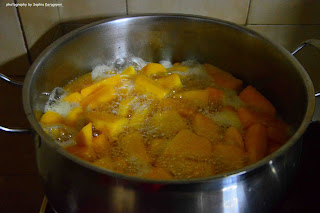
 Βήμα πέμπτο: Φτιάχνουμε το σιρόπι. Για κάθε κιλό κολοκύθι αντιστοιχεί ένα κιλό ζάχαρη, αλλά μου φαίνεται υπερβολικό και έτσι για τα 5 κιλά κολοκύθι βάζουμε 4 πακέτα ζάχαρη και 4 κούπες νερό. Μόλις πάρει μία βράση το σιρόπι, ρίχνουμε μέσα το κολοκύθι και το βράζουμε μαζί με το σιρόπι για 40 λεπτά. Εμείς το κλείσαμε λίγο νωρίτερα για να μην παραμαλακώσει κι εκεί θα παραμείνει μέχρι την επόμενη μέρα για να δέσει.

 Day 2:


 Κείμενο, Φωτογραφίες: Sophia Karagianni

Είμαι στην Κω. Ψάχνω γλυκό του κουταλιού κολοκύθι. Δε βρίσκω όσο και να ψάξω.
Αποφασίζω να το φτιάξω μόνη μου.
Κι όταν λέμε μόνη μου επιστρατεύω όποιον έχω και δεν έχω, όλες μου τις φίλες, άλλη κατεβάζει συνταγές, άλλη παίρνει τη μαμά της τηλέφωνο για πιο εξειδικευμένες οδηγίες, άλλη βρίσκει τον ασβέστη και ξεκινάει η διαδικασία.


Day 1
Βήμα πρώτο: Είναι η εποχή της κολοκύθας? Δεν είναι ακριβώς, αλλά κολοκύθες υπάρχουν. Να "κλέψω" μία από ένα χωράφι? όχι, θα την αγοράσω. 6,5 ευρώ (με έκπτωση) τα 7 κιλά.

 |
| κολοκύθες υπάρχουν πολλές... |
 |
| ...αλλά μία είναι η τυχερή... |
Τα 5 κιλά θα τα κάνουμε γλυκό του κουταλιού και το υπόλοιπο θα κάνω μια γλυκιά κολοκυθόπιτα που αρέσει στο γιο μου.
Βήμα δεύτερο: Αγοράζω όλα τα χρειαζούμενα υλικά, 5 πακέτα ζάχαρη!, ξινό, γαρύφαλλο, βρίσκουμε αρμπαρόριζα, μέλι, κανέλλα.
Βήμα τρίτο: Πηγαίνω στο σπίτι της Μαρίας. Η Μαρία είναι ζαχαροπλάστισσα ολκής, ενώ εγώ είμαι ψιλοάσχετη, επιπλέον έχει αυλή κι όλα γίνονται πιο εύκολα.
Ας αρχίσει η παρασκευή. Η ώρα είναι λίγο μετά τις 2 το μεσημέρι. Το πιο δύσκολο απ' όλα είναι να κόψουμε την τεράστια κολοκύθα. να την ανοίξουμε, να την καθαρίσουμε από τα σπόρια και κάτι σα μαλλούπππα, να αφαιρέσουμε την εξωτερική φλούδα της με το μαχαίρι και να την κόψουμε σε κομμάτια (μεγάλους κύβους).
 |
| την κόβουμε.. |
 |
| την καθαρίζουμε... |
 |
| την κόβουμε σε μεγάλους κύβους (ο Θεός να τους κάνει...) |
Η Μαρία ανακατεύει καλά δυο-τρεις χούφτες ασβέστη σε μια λεκάνη νερό κι όταν διαλυθεί καλά ο ασβέστης, σουρώνει το διάλυμα πάνω από τα κομμάτια της κολοκύθας.
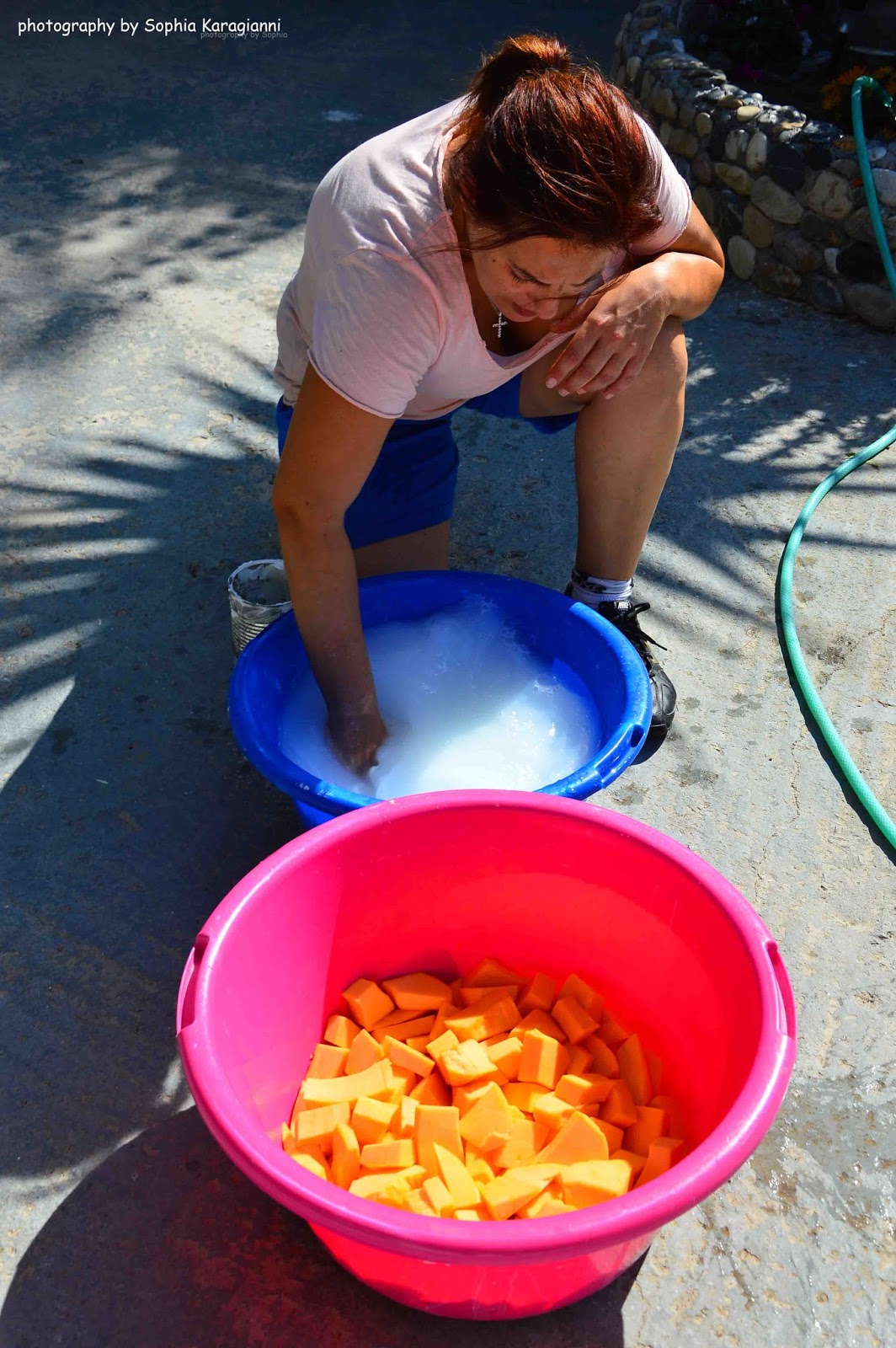

Για πέντε ολόκληρες ώρες θα μείνει η κολοκύθα στον ασβέστη, ανακατεύοντας σε τακτά χρονικά διαστήματα για να μην κάτσει ο ασβέστης. Η ώρα είναι περασμένες τρεις και φεύγω για να ξαναγυρίσω 5 ώρες μετά για να συνεχίσουμε. Ενδιάμεσα φτιάχνω και την κολοκυθόπιτα. Άλλη τυραννία αυτή!


Βήμα τέταρτο: Επιστρέφω στις 8. Βάζουμε νερό να βράσει στην κατσαρόλα, ξεπλένουμε πολύ καλά το κολοκύθι -που έχει γίνει σαν μπετόν αρμέ- από τον ασβέστη (5-6 νερά) και μόλις κοχλάσει το νερό, ρίχνουμε μέσα το κολοκύθι και βράζουμε για πέντε λεπτά.


Βήμα τελευταίο: Μετά από σχεδόν 24 ώρες μες στο σιρόπι, το γλυκό μας παίρνει ακόμη μια βράση, για μισή ώρα ακόμη περίπου, μέχρι να δέσει το σιρόπι, αυτή τη φορά με λίγη αρμπαρόριζα, κανέλλα, γαρύφαλλο, μέλι και λίγο ξινό.

Αποστειρώνουμε τα βάζα, τα γεμίζουμε όσο είναι καυτά, τα γυρίζουμε ανάποδα για να φύγει ο αέρας, και τα χαρίζουμε με περίσσια γλύκα στα αγαπημένα μας πρόσωπα.

Mία μικρή συμβουλή. Κρατήστε το κολοκύθι περισσότερο από 5 ώρες στον ασβέστη, ίσως και όλη νύχτα για ακόμη καλύτερο αποτέλεσμα. Η αναφερθείσα δοσολογία έδωσε 11 βάζα γλυκό.
Περί ορέξεως κολοκυθόπιτα και γλυκό κολοκύθι!
Συμπεράσματα: Όταν έχεις φίλους, μπορείς να καταφέρεις τα πάντα!
Για μένα Κως δεν είναι μόνο ο τόπος, οι αρχαιολογικοί χώροι και οι εκκλησίες, είναι και οι άνθρωποι... Μαρία Αγογλωσσάκη, σ' ευχαριστώ για τη βοήθεια..
Δεν υπάρχει πιο όμορφο συναίσθημα από το να βρίσκεις τρόπο να εκπληρώνεις μια επιθυμία...
Ένας ιδιοκτήτης τουριστικού στην παλιά πόλη, βλέποντας να του ζητάω γλυκό κολοκύθι "σαν γκαστρωμένη", μου υποσχέθηκε πως θα μου βρει, ακόμη κι αν χρειαστεί να το φτιάξει μόνος του.. Λέω να του πάω ένα βαζάκι...

Ακολουθεί η μετάφραση του κειμένου στα αγγλικά: