


1) Το Τζαμί Defterdar στην Πλατεία Ελευθερίας
2) Το Τζαμί Gazi Hasan Pasa στην Πλατεία Πλατάνου
3) Το Τζαμί Hasan Pasa στο Πλατάνι
4) Το Eski Τζαμί στην Πλατεία Διαγόρα
5) Το Τζαμί Attik Ελ. Βενιζέλου και Εθνάρχου Μακαρίου
6) Το Τζαμί Moruk, οδός Ηφαίστου, Χαλουβαζιά
7) Το Τζαμί στο Κακό Πρινάρι


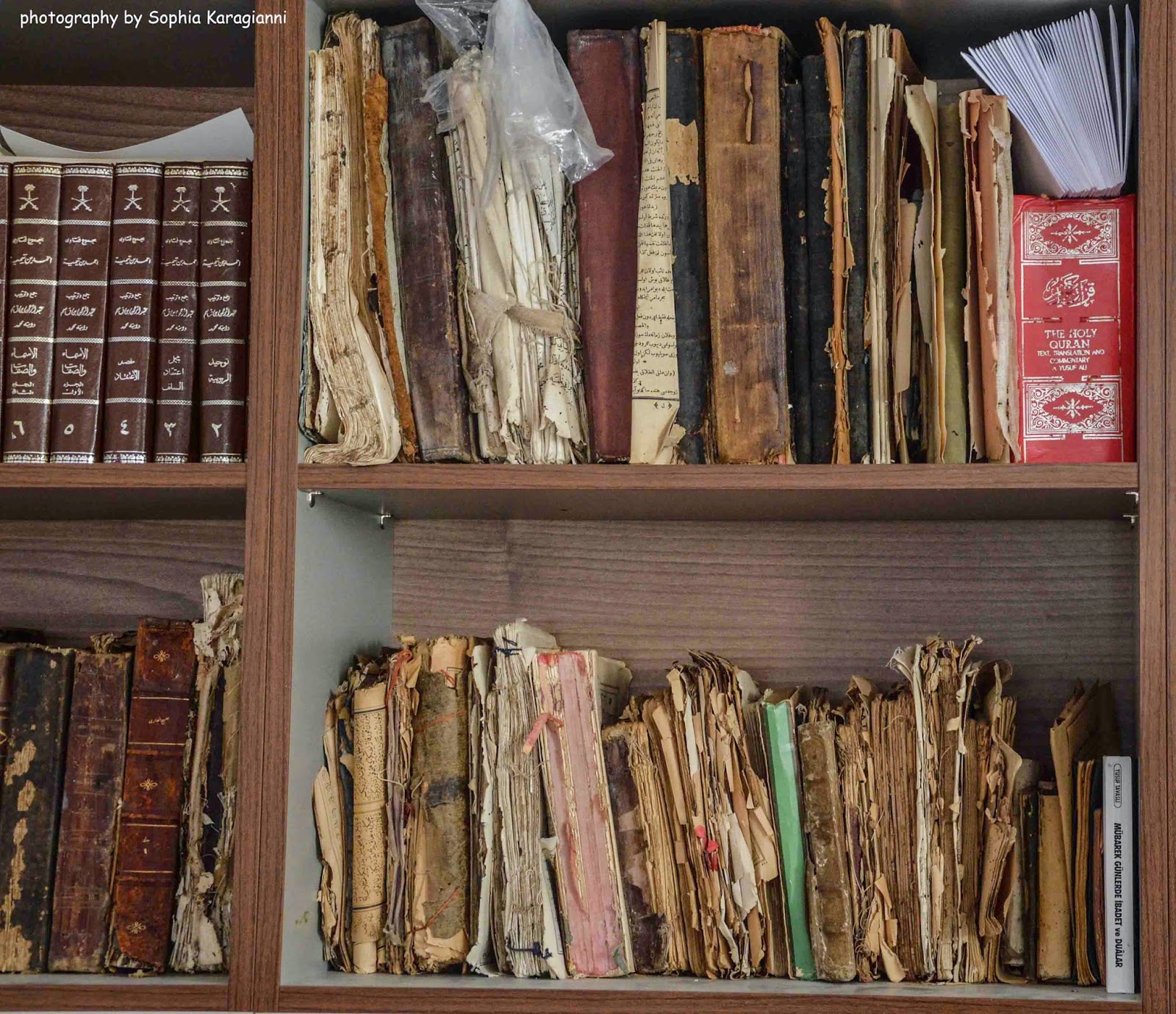
Επίσης, μπροστά από το τέμενος με τον επιβλητικό μιναρέ, στην αυλή, υπάρχει ένα άλλο κτίσμα, όπου φυλάσσονται πολύ παλιά τουρκικά βιβλία.



 |
| ο επί 23 χρόνια Ιμάμης της Κω Σερίφ Δαμάδογλου |




 |
| όλο το Κοράνι σε σμίκρυνση |


Platanı Mosque of Kos – Hasan Pasha
The Muslim mosque of Kermete has been designated an archaeological site, according to the Permanent Register of Declared Archaeological Sites and Monuments of Greece.
The mosque (the word comes from Turkish: cami) is the place of worship for Muslims. This mosque is known as the Platanı Mosque of Kos – Hasan Pasha. In the past it was called Kermete, and it is believed to have been built by Gazi Hasan Pasha (hence its name), due to the strong resemblance of both the mosque and its minaret to those of the Loggia Mosque in Platanos Square.
It is located at a central point in Platanı, the picturesque village next to the town of Kos, just before the archaeological site of the Asclepieion. The village was formerly called Kermendes or Kermetes (until 1964, when Greek authorities renamed it “Platanı” as part of a broader policy of changing place names of Turkish origin throughout Greece, a process that had already begun decades earlier).
Platanı is the village where most of the island’s more than 1,500 Muslims reside and represents a microcosm of the diversity and harmonious coexistence of people and cultures that has endured through time and continues to welcome and enchant visitors to Kos.
On Thessalias Street in Platanı, we visited the mosque and were fortunate not only to find it open, but also to be welcomed by the Imam of Kos, Serif Damadoglu, who has served for 23 years. He explained aspects of the mosque’s history and function and guided us with great patience and kindness.
In the town of Kos, several mosques survive, some in excellent condition and others less so. Specifically, the following remain:
-
Defterdar Mosque, Eleftherias Square
-
Gazi Hasan Pasha Mosque, Platanos Square
-
Hasan Pasha Mosque, Platanı
-
Eski Mosque, Diagonas Square
-
Attik Mosque, Eleftheriou Venizelou & Ethnarch Makarios Streets
-
Moruk Mosque, Hephaestou Street, Halouvazia
-
Mosque at Kako Prinari
Only five of these have preserved all or part of their minaret. The Platanı Mosque is the only mosque that continues to operate today, together with the Defterdar Mosque in Eleftherias Square.
The mosque was built in 1199 AH (Hijri year), that is 1778, 237 years ago, by the Algerian Gazi Hasan Pasha. It is an impressive building with a beautiful and impeccably clean courtyard, where an ancient marble trough dominates—once used for grinding wheat.
In front of the mosque, beneath the imposing minaret, there is another building in the courtyard where very old Turkish books are kept.
We, of course, followed the ritual as well, removed our shoes, and headed toward the mosque entrance.
Before the main prayer hall there is a vestibule where worshippers leave their shoes; from here a staircase also leads to the minaret.
When we arrived at the mosque it was 10 a.m., not prayer time, yet we found the Imam inside, praying in civilian clothes. When he began explaining things and guiding us, we did not immediately realize that he was the Imam. Inside the prayer space there were children playing with toy cars and others running around. I mention this because it helped us feel relaxed, as if we were in a museum rather than in a sacred place of worship.
Serif Damadoglu, Imam of Kos for 23 years
In the same space, we also learned about the Minbar, the pulpit from which the Imam speaks at the top of the steps.
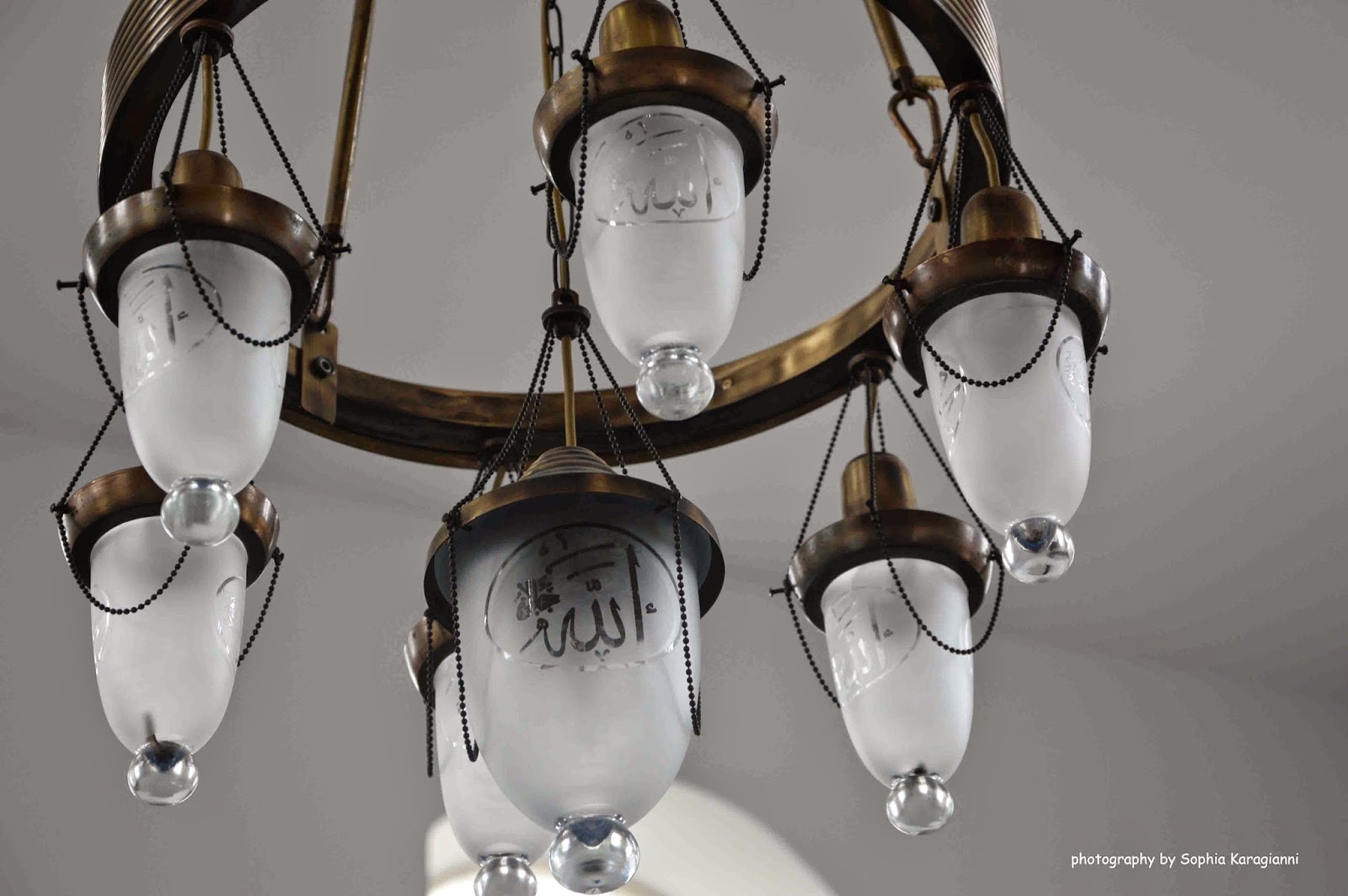
Every decorative element, every frame, every sign, and even the chandelier lamps have a story to tell—mostly connected to Mecca, Medina, or the Qur’an.
The entire Qur’an in miniature
When our tour of the mosque was completed, we were allowed to enter the minaret. Through a narrow, difficult spiral staircase, we climbed to the spot from which the Imam (formerly called the Hodja) would once call the faithful to prayer. Climbing this staircase is not easy—impossible if one is overweight or claustrophobic—especially considering that the Imam had to do this five times a day.
During the 1933 earthquake, the minaret suffered serious damage, which the Italians later restored. From the narrow balcony we enjoyed a panoramic view of Platanı and Agios Athanasios.
For me and my friends, spending that morning at the Platanı Mosque with the guidance of the Imam was a very interesting experience and a beautiful journey into the history of our homeland.

Nice one
ΑπάντησηΔιαγραφήthanks, I guess.. If you mean it...
Διαγραφή