Ο ΜΥΛΟΣ ΤΟΥ ΑΜΑΛΛΟΥ ΣΤΗΝ ΑΝΤΙΜΑΧΕΙΑ




THE AMALLOS WINDMILL IN ANTIMACHIA
Παλιότερα ο Μύλος λειτουργούσε όχι σαν επιχείρηση αλλά σαν διατηρητέο παραδοσιακό κτίσμα αλλά και σαν εκθεσιακός χώρος για κάθε επισκέπτη που ήθελε να θαυμάσει την εφευρετικότητα των ανθρώπων για να κερδίσουν τον επιούσιον.
Για κάποια χρόνια ο Μύλος παρέμεινε κλειστός γιατί χρειαζόταν ανακατασκευή και πλήρη αντικατάσταση της ξυλείας η οποία τελικά και ήρθε από την Αφρική. Ο ιδιοκτήτης του Μύλου Ελπιδοφόρος Άμαλλος, πάππου προς πάππου μυλωνάς, κατάφερε να ξεπεράσει τα εμπόδια, να αναστήσει το Μύλο, ο οποίος και επαναλειτουργεί πλήρως μετά από τα 5 χρόνια που έμεινε κλειστός.
 |
| το τεράστιο κλειδί της μικρής πόρτας του μύλου |
Με 2,5 ευρώ (οι μεμονωμένοι επισκέπτες και με 1 ευρώ τα ομαδικά), ο επισκέπτης μπορεί να ξεναγηθεί στα τρία πατώματα του Μύλου, και να κάνει ένα γρήγορο ταξίδι στο παρελθόν παρακολουθώντας τη λειτουργία του μύλου και τη μετατροπή του σιταριού σε αλεύρι πριν να πάρει τη θέση τους η σύγχρονη αλευροβιομηχανία.
Στο ισόγειο, ο κύριος Άμαλλος έχει διαμορφώσει το χώρο κατάλληλα για να θυμίζει το δωμάτιο που ο μυλωνάς συνήθιζε να υποδέχεται τους πελάτες αλλά και να ξαποσταίνει ή και να μένει μερικές φορές. Στο χώρο δεσπόζει ένα πρόχειρο ταβλαδάκι-κρεβάτι, μερικά σκαμνάκια και πολλά προσωπικά και οικογενειακά κειμήλια. Επίσης, στο ισόγειο βρίσκεται και το πέτρινο εκκρεμές, μια πέτρα μεγάλη, διάτρητη, μ’ ένα σχοινί που φτάνει μέχρι το πηδάλιο (τιμόνι) του μυλωνά στο δεύτερο πάτωμα και με τις ανάλογες κινήσεις ρυθμίζονται οι στροφές της μυλόπετρας ακόμη και το σταμάτημα του μύλου.
Στον πάνω ταβλάδο, στο δεύτερο πάτωμα, βρίσκεται η πραγματική δράση. Ο κύριος Αντώνης χρησιμοποιώντας ένα μοχλό, δίνει ώθηση να γυρίσει, να περιστρέφεται εύκολα η «καππάζα» κι έτσι περιστρέφεται ολόκληρη η σκεπή πάνω από το κεφάλι σου (ή έτσι μου φάνηκε?)
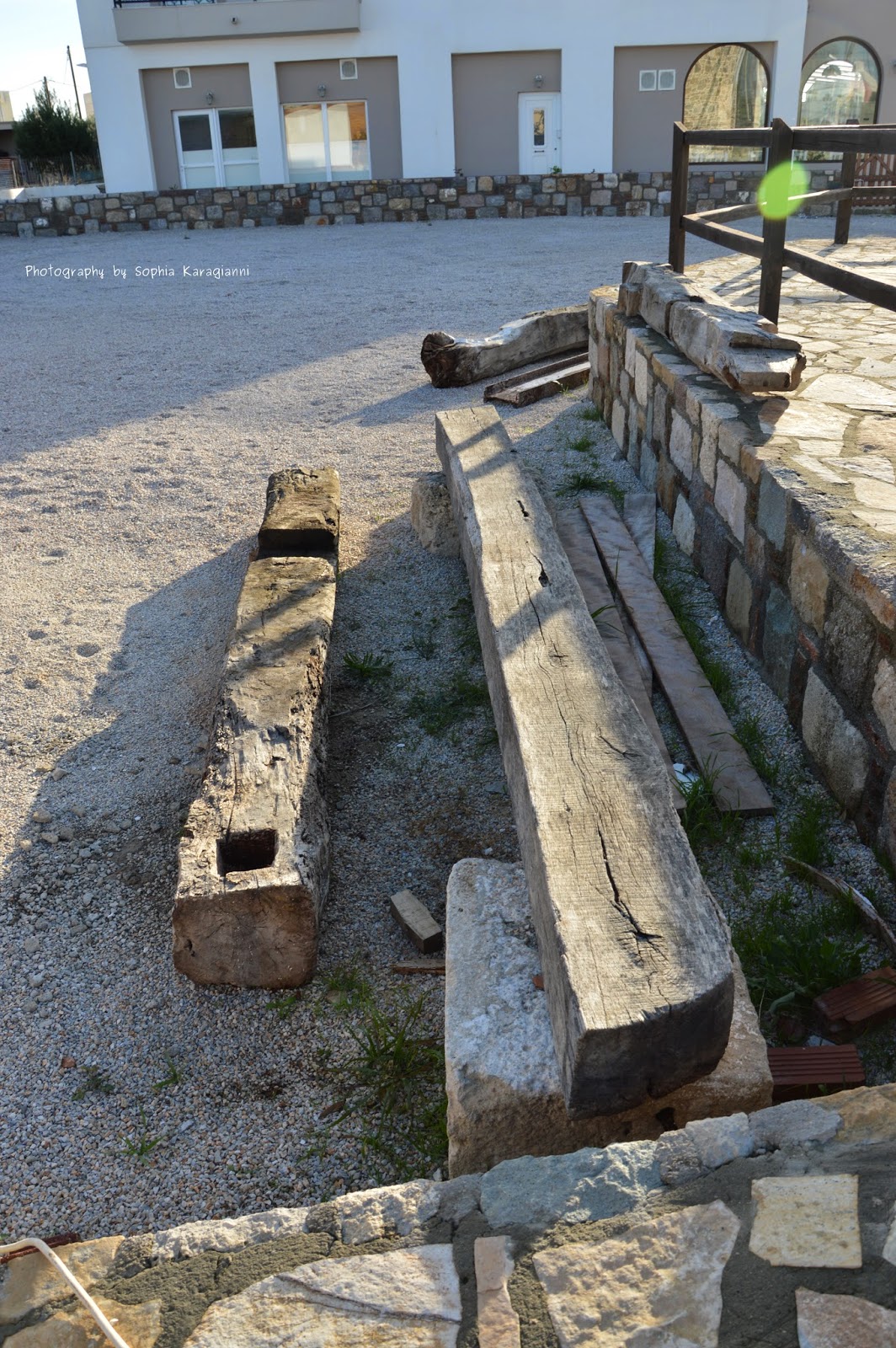
Στον όροφο αυτό εκτός από τη μυλόπετρα, όλα είναι φτιαγμένα από ξύλο. Όλα τα ξύλα ήρθαν από την Αφρική και έχουν από δω και πέρα 200 χρόνια ζωής. Το πιο επιβλητικό κομμάτι του χώρου είναι ο άξονας, ο οποίος είναι ένα μονοκόμματο κομμάτι 8 περίπου μέτρων όπου στηρίζεται η ρόδα.
Η ρόδα είναι ένας ξυλογλυπτος ογκώδης τροχός με 60 γοφούς και το φανάρι, που θυμίζουν γρανάζια μηχανών.
Το σιτάρι μπαίνει στην ταϊστρα και κατόπιν από την κίνηση πέφτει λίγο λίγο στο κέντρο της μυλόπετρας. Τότε μετατρέπεται η κίνηση από κάθετη σε οριζόντια μέσω του κομματιού που λέγεται φανάρι.
Το σιτάρι, το οποίο είναι παραγωγή του ίδιου του κυρίου Άμαλλου, αλέθεται και μετά λίγο λίγο γίνεται αλεύρι και πέφτει σε ειδική υποδοχή που καταλήγει στο τσουβάλι του πρώτου πατώματος.
 |
| ο μύλος το 2011 |
Στην αυλή του Μύλου λειτουργεί εκθετήριο με τον παλιό εξοπλισμό του Μύλου, τον άξονα και τα πρωτότυπα χειροποίητα ξυλόγλυπτα όργανα, σχέδια και μελέτες, και αναμνηστικά με θέμα πάντα το Μύλο. Οι άνθρωποι που φροντίζουν το μύλο, είναι ιδιαίτερα φιλικοί κι εξυπηρετικοί και στο τέλος της ξενάγησης κερνάνε κουλουράκια ή παξιμαδάκια φτιαγμένα από το αλεύρι του Μύλου.
 |
| η βρύση έξω από το Μύλο |
 |
| ο παλιός άξονας με τη ρόδα |
 |
| σχέδια και μελέτες |
 |
| ο κύριος Αντώνης μας εξηγεί τη χρήση των διάφορων εργαλείων |
 |
| χειρόμυλοι |
Κείμενο: Σοφία Καραγιάννη, Θανάση Η. Γιωργαλλή-Κωακές Καταγραφές από το χθες (σ.25 "Οι Ανεμόμυλοι της Κω"), ρεπορτάζ Μαρίας Παπαζαχαρίου για το ΔΗΡΑΣ εδώ
 |
| ο Μύλος τον Αύγουστο του 2013 |
φωτογραφίες: Sophia Karagianni
Ακολουθεί η μετάφραση του κειμένου στα αγγλικά:
THE AMALLOS WINDMILL IN ANTIMACHIA
There are dozens of reasons to visit Antimachia—I know this now, having spent countless hours exploring it. From a tourist’s perspective, however, there have always been two main reasons to reach the center of the village: the Traditional House and the Traditional Windmill, also known as the Amallos Windmill.
In the past, the Windmill did not operate as a business but as a preserved traditional structure and exhibition space for visitors who wanted to admire the ingenuity of the people who toiled to earn their daily bread. For some years , however, the Windmill had remained closed, as it required reconstruction and a complete replacement of its wooden parts, which eventually arrived from Africa. The owner, Elpidoforos Amallos—whose family has been millers for generations—managed to overcome the obstacles and revive the Windmill, which is now fully operational again after five years.
With an entrance fee of €2.50 (or €1 for group visits), visitors can tour the three floors of the Windmill and take a quick journey into the past, watching how the mill works and how wheat becomes flour—before modern flour mills took over.
On the ground floor, Mr. Amallos has arranged the space to resemble the room where the miller would welcome customers, rest, or sometimes even stay overnight. A simple wooden bed, a few stools, and several personal and family heirlooms stand out. Here you will also find the stone pendulum: a large, perforated rock hanging from a rope that reaches up to the miller’s steering wheel on the second floor. With specific movements, the miller could regulate the millstone’s speed—or even stop the mill altogether.
Climbing the somewhat spiral stone staircase without railings, you reach the first floor (the tablados). In the ceiling, four vertical planks arranged like a square honeycomb with two hooks for holding sacks form the “neck” through which the ground flour falls. This floor is filled with sacks of flour, and, according to our guide and mill operator, Mr. Antonis, when the mill is in full operation, it can produce up to 700 kilos of flour per day.
Upstairs, on the second floor, is where the real action happens. Using a lever, Mr. Antonis sets the capazza in motion (this is the rotating roof system of the mill), which makes the entire roof rotate above your head—at least that’s what it felt like!
Here, apart from the millstone, everything is made of wood. All the timber came from Africa and is expected to last for the next 200 years. The most impressive element is the main axle, an 8-meter-long solid piece of wood that supports the wheel.
The wheel is a massive carved wooden gear with 60 teeth and a mechanism called the fanari, resembling machine gears.
The wheat is poured into the feeder and gradually falls into the center of the millstone. The movement is converted from vertical to horizontal via the fanari. The wheat—grown by Mr. Amallos himself—is ground into flour, which then falls through a special chute into the sack on the first floor.
The contribution of windmills and watermills was especially significant during the years of occupation and famine. People would come here to grind wheat or barley for their family’s bread, always in fear of the occupiers. Testimonies speak of Germans confiscating harvests for their own use and even forcing millers at gunpoint to operate the mills for the army’s flour supply. In fact, in 1944, this specific Windmill was seized by the Germans to grind rye exclusively for their troops—but thanks to the mill, many villagers were saved from starvation.
The windmill in 2011
In the courtyard, there is an exhibition area showcasing the old mill equipment, the original axle and wheel, unique handcrafted wooden tools, sketches, technical studies, and souvenirs—all themed around the Windmill. The people who care for the mill are exceptionally friendly and helpful, and at the end of the tour they offer visitors biscuits or rusks made with flour from the mill.
The fountain outside the Windmill
The old axle with the wheel
Sketches and technical studies
Mr. Antonis explaining the use of the various tools

Δεν υπάρχουν σχόλια:
Δημοσίευση σχολίου